Showing posts with label Social. Show all posts

3/22/2011

HABERMAS’S THEORY OF COMMUNICATIVE ACTION AND THE THEORY OF SOCIAL CAPITAL

Roger Bolton (Department of Economics and Center for Environmental Studies)

Williams College I am bringing together two clusters of ideas I think are important. One is the thought of the German writer Jürgen Habermas, a prominent philosopher whose ideas are meaningful to many of our colleagues who are what I’ll call “planning academics,” that is scholars who teach planning in universities. The other is a cluster of ideas on social capital and social networks.
Habermas is a contemporary philosopher with a worldwide reputation. One of his best-known ideas is communicative action, in which actors in society seek to reach common understanding and to coordinate actions by reasoned argument, consensus, and cooperation rather than strategic action strictly in pursuit of their own goals (Habermas, 1984, p. 86). However, it’s not only his general fame that makes him relevant to social capital and networks. There are other reasons more specific to geography and regional science. One is that many geographers, sociologists, and planning theorists appeal to his ideas in their work (though not many economists do).
Prominent examples are scholars who apply Habermas’s ideas to a general (but not Marxist) critique of late capitalist societies, to analysis of mass movements, and to normative assessments of planning practice (see for example Healey 1997, Forester 1985, 1992, Miller 1992, 2000, Barnes and Sheppard 1992).
Another reason is that Habermas provides a theoretical basis for a view of planning that emphasizes widespread public participation, sharing of information with the public, reaching consensus through public dialogue rather than exercise of power, avoiding privileging of experts and bureaucrats, and replacing the model of the technical expert with one of the reflective planner (Argyris and Schön 1974, Schön 1983, Innes 1995, Lauria and Soll 1996, Wilson 1997). In this view, the legitimacy of democracy depends not only on constitutional processes of enacting laws, but also on "the discursive quality of the full processes of deliberation leading up to such a result," as Stephen White (1995, p.12) puts it. John Dryzek notes Habermas prompts the policy analyst to work on conditions of political interaction and design of institutions rather than merely the content of policy proposals, and Habermasian ideal institutions rule out “authority based on anything other than a good argument” (1995, pp. 108-110).
A third reason, from almost the beginning of an understanding of Habermas's communicative action one sees the possibility of a connection to social capital. Communicative action is individual action designed to promote common understanding in a group and to promote cooperation, as opposed to "strategic action" designed simply to achieve one's personal goals (Habermas 1984, especially pp. 85-101, 284-8). Habermas does not use the term “social capital,” but a reader can see possible connections while reading what he says about other things. Some planning theorists believe a desideratum of planning is the encouragement of communicative action to facilitate the production of social capital. The relevance to planning is suggested by Habermas’s statement: “In the case of communicative action the interpretive accomplishments on which cooperative processes of interpretation are based represent the mechanism for coordinating action …." (1984, 101; italics "coordinating" in original, italics on "cooperative" added).
He is one of the most renowned philosophers and social theorists of our time and undoubtedly the best known German philosopher. His stance as a “critical theorist”—the most famous of the “Frankfurt School”—and his ideas of communicative action and the “public sphere” are known to many intellectuals in a variety of disciplines. There are many books and essays, and extensive traffic in messages on electronic mailing lists, expositing, interpreting, and criticizing him, and scholars apply his theories to politics, law, law, philosophy of science, education, theology, literary studies, even the performing arts (Singer 2000). No ivory tower theorist, he is a highly visible public intellectual and participates in many public discussions in Germany and in elsewhere in Europe. He is known as an advocate of reform and democratization of universities in Germany. After a series of lectures by Habermas in China, a leading Chinese philosopher, Jin Xiping, noted that translations of Habermas were available in China far more readily than ones of Heidegger or Derrida, and said, “Almost everyone knows Habermas as the last great social critic" (Calloway 2001). “He is comparable to Hegel [in] his enormous, positive, intellectual achievement ….”—this from James Marsh, who is also one of the sharpest critics (Marsh 2000, p. 565). Habermas is also known as a scholar who is thoroughly steeped in the thought of philosophers and social scientists who preceded him, and for extensive use of sociology and Anglo-American philosophy in his work. Perhaps of special interest to scholars in regional science is his reliance on but also and criticism of Max Weber.
The literature on social capital that is dominant in the social sciences today does not say much about links to Habermas. Therefore, it seems worthwhile to investigate possible connections, and also to compare a Habermasian approach to some examples of the more dominant approach. This paper is organized as follows: Section II is a brief biographical sketch of Habermas, then Sections III through VI describe and comment on important parts of his social theory, being on social actions (Section III), details of the theory of communicative action (Section IV), the theory of the lifeworld and how it complements the theory of communicative action (Section V), and the muted legacy of Marx (Section VI). Section VII presents preliminary conclusions on the relevance of Habermas to theories of social capital, and Section VIII describes two important recent models of social capital formation from economic theory. Section IX concludes.

Source: http://web.williams.edu/Economics/papers/Habermas.pdf

Download Full PDF Articles here

1/01/2011

Social Work Pay And Types of Jobs

Many people hesitate about getting a career working with people due to fears that the pay will be very low. You may be surprised that some social workers can earn a good living. There are some entry level positions that don't pay much and require a great deal of family work as well as paper work. Nonetheless, the job can be very fulfilling because there can so much satisfaction in watching someone achieve true change. People who really want to make a difference in society often overlook the low pay. Their greatest reward is improving the lives of the people in the community. However, over time, people can burn out or become dissatisfied with the pay not providing sufficient funds for one's lifestyle. There are ways to move up within an agency, add on a private practice, become a supervisor for students and other ways to increase one's income.

With time and experience, the pay rate will continually climb. The starting salaries often are determined by the amount of education you received before starting to work. You will even have to factor in the region in which you want to work. Also, there are many different types of social work, and each factor in the amount of money you can make. Some types of counseling can be in high security settings such as prisons and the pay often reflects this type of situation. In the educational areas of this career, starting salary is between thirty and thirty six thousand dollars a year.

You'll want to apply to many networks for insurance as this will also increase the types of counseling centers you can work in. If you wish to get into private practice, this is important as well because you'll need to be able to take a variety of insurances unless you wish to use only cash pay methods. You will not only reap the rewards of the awesome and inspiring work you do, but you can also make a decent living. The great thing about this type of work is that it is always needed, so it is practically recession proof. Also, the longer you work the higher your pay becomes. This career path is never static. You may want to be a hospice social worker, go into forensics, work with the elderly or do family counseling. You will never get bored with this type of work as you are constantly faced with new challenges and problems to solve.

12/22/2010

Society, Politics & Philosophy

Academic Philosophy
Bertrand Russell made a very true observation when he stated that:

'Morally, a philosopher who uses his professional competence for anything except a disinterested search for truth is guilty of a kind of treachery'.

An academic paper you won't find within our academic philosophy section of the Society, Politics and Philosophy category was written by Steven Yates and entitled 'Academic Philosophy Today: Thanks, But No Thanks'. Steven Yates has a PhD in Philosophy and published a vitriolic treatise outlining his disgust at what he saw academic philosophy degenerating into. As it happens, I agree with him. One book of his you will find there is 'Civil Wrongs: What Went Wrong with Affirmative Action'. Basically, Steven Yates writes exactly what other people are thinking - and he does it quite acerbically!

When we think of civil rights one of the first things to spring to mind is racial discrimination - followed by racial integration and even racial equality. People, however, being people, don't always think in accordance with the 'Party line': people see increasing levels of crime, high rates of murder in certain neighbourhoods and employers whose hands have been tied to a certain extent - they can no longer discriminate within the job market. Steven Yates writes about community autonomy, about certain standards within society that have, in effect, created an 'underdog' - which was never the intention of the Government.

Steven Yates, in line with the concepts of Ludwig von Mises, recognises how politically worthy is the underdog, where the victim, as the result of Government intervention [interference?] emerges victorious over education and other more attractive attributes. Steven Yates' book is about modern life and how injustice reins supreme - including the mandatory discrimination, filtered down from central government, of the white middle-class male. Employers are now being marginalised into hiring black workers rather than having the total freedom to choose the best one for the job rather than face the possibility of a potential law-suit. Steven Yates defends liberty and the right to choose - and has little respect for today's concepts of academic philosophy.

Academic Sociology
Academic sociology seems to have splintered into various factions, each keen to make their own positions felt - and acknowledged as the one true direction in which academic sociology should go. One of these factions has been run by the feminist lobbyists such as Caroline Bartlett Crane and Jane Addams. Is this a valid goal for academic sociology? Not all women are rabid feminists, with many women watching the antics of the feminist lobby with nothing short of derision in some quarters! Sociology should be about social justice and social reform per se, rather than focusing solely on a single aspect of the social argument.

When sociology was first developed as a discipline, there was rapid growth in industrialisation. As a result, urbanisation was developing and, to keep pace with demand immigration was encouraged - and, as historical events unfolded, essential. None of this needed to isolate the feminist cause as the sole thrust of sociology: it was just one view amongst many. Academic sociology was considered a progressive subject to study the rapidly evolving status of society within the 20th century and, more latterly, the 21st century.

I am certainly not referring to the feminist cause here just to sound off irrelevantly: you will find one of Linda Rynbrandt's books amongst our pages of Academic sociology, featuring Caroline Bartlett Crane. The book is entitled 'Caroline Bartlett Crane and Progressive Reform', published by Routledge. To illustrate what I mean about the feminist cause being linked with academic sociology, this book has been sub-titled 'Social Housekeeping as Sociology'.

Psychology Textbooks
Psychology is about individuals and how their behaviour impacts on the people around them. It involves how they think and how they act and the reasons why they think and act in the ways they do. You will find a range of interesting and diverse psychology textbooks within our category of Society, Politics and Philosophy such as the book on relationships and body language written by Leil Lowndes: 'How to Talk to Anyone: 92 Little Tricks for Big Success in Relationships'. A completely different kind of psychology textbook, written by Richard Gross is 'Psychology: The Science of Mind and Behaviour'. This book covers everything from substance abuse to health psychology and has been described as the 'trailblazer in the psychology textbook revolution'.

True Accounts
This section on true accounts simply wouldn't be complete without discussing the book about the life of Harry Patch who recently passed away at the grand old age of 111. Harry truly epitomised the ethos of his generation as explained in the book he wrote before he died: 'The Last Fighting Tommy: The Life of Harry Patch, the Only Surviving Veteran of the Trenches'. The Times describes the book as a 'deeply moving tribute to the courage and suffering of all who took part, and to the fallen'. A generation later and another World War: 'The Diary of a Young Girl: The Definitive Edition' was written explaining what life was like in a small Dutch town for a young Jewish girl and her family, hiding away in fear of their lives.

12/17/2010

Three Events That Will Shape the Future of Nigeria in 2011

As the year gradually draws to an end, the entire citizens of Nigeria are hoping and praying for a better tomorrow. The aspiration of a new year has suddenly disappeared and in its place a renewed determination for a better country in the year 2011.

In this article, I will be highlighting three fundamental events that would shape the future of the most populous nation in Africa. Some of the revelations will amaze even the most passionate followers of history.

Power Sector Reform
Nigeria presently generates an average of 3500 Mega Watts of daily electricity, which is not enough to drive the nation economy. This figure has continued to fluctuate in the past two years, with the Government even threatening to declare a state of emergency in the power sector. The importance of power in any nation's economy cannot be disputed, as it acts as a catalyst to drive small and medium-scale investments.

According to a time-table released by the federal Government of Nigeria, the power sector would be fully privatized by 2011; giving room for foreign investors to inject
Funds into the sector and install new independent power plants to boost power generation to more than 10,000 Mega Watts. The success or failure of the power sector reform will shape the future of Nigeria, as majority of Nigerians are already anticipating a revolution in that sector.

Democratic Elections
When in 1999 Nigeria conducted her first elections after the military Government handed over to Civilian, nobody gave her a chance to sustain the nascent democracy. Three successive elections have since been held since 1999 and the results of such elections have always been disputed in the court of law by opposition parties, with some elected officials losing their seat in the process. As we approach another election year, there is so much apprehension in the 36 states of the country, with the presidential elections attracting the most attention. The main Peoples Democratic Party (P.D.P) is presently engaged in a stiff contest to determine which party controls the Lower and upper legislative arm.

The independent National Electoral Commission headed by Professor Attahiru Jega has already released election time-table for elections at all levels of the country. In the past, the issue of election violence, ballot snatching and vote rigging has marred results which have made next year election even more critical in the continuous existence of the nation. Pundits are already predicting a massive transformation in the political equation of Nigeria, considering the recent agitation for electoral reforms and lose of power by the Peoples Democratic Party in some states in the country. Which ever way the pendulum swings politically, a democratically elected president will be sworn in on the 29th of May 2011.

FIFA Women World Cup Germany 2011
Football remains a unifying factor in Nigeria, as it has brings together the more than 200 tribes that make up the country. The national U-20 female team popularly known as the Falconets created history this year when they won Silver in the FIFA U-20 Women World Cup hosted by Germany. Their U-17 counterparts, the Flamingoes were Quarter finalist at the U-17 tournament hosted by Trinidad and Tobago this year. The Senior National female team- The Super Falcons made history when they lifted the African Women Championship a record Eight times when the tournament was hosted by South Africa from the 31st of October to the 14th of November 2010. These performances have brought a renewed expectation of a triumphant performance by the Super Falcons as they prepare to storm Germany for the fourth consecutive time. If the golden girls from Nigeria eventually lift the elusive trophy, it will be the biggest feat ever achieved in Nigeria's football history. It will definitely determine the future of Nigeria football in 2011 and the year ahead.

11/30/2010

Contemporary Approaches to the Social Contract

The idea of the social contract goes back, in a recognizably modern form, to Thomas Hobbes; it was developed in different ways by John Locke, Jean-Jacques Rousseau, and Immanuel Kant. After Kant the idea largely fell into disrepute until it was resurrected by John Rawls. It is now at the heart of the work of a number of moral and political philosophers. The basic idea seems simple: in some way, the agreement (or consent) of all individuals subject to collectively enforced social arrangements shows that those arrangements have some normative property (they are legitimate, just, obligating, etc.). Even this vague basic idea, though, is anything but simple, and even this abstract rendering is objectionable in many ways. To explicate the idea of the social contract we analyze contractual approaches into five variables: (1) the nature of the contractual act; (2) the parties to the act; (3) what the parties are agreeing to; (4) the reasoning that leads to the agreement; (5) what the agreement is supposed to show.

1. The Contractual Act

1.1 Consent and Agreement

The traditional social contract views of Hobbes, Locke, and Rousseau crucially relied on the idea of consent. For Locke only “consent of Free-men” could make them members of government (Locke 1689, §117). Now in the hands of these theorists—and in much ordinary discourse—the idea of “consent” implies a normative power to bind oneself. When one reaches “the age of consent” one is empowered to make certain sorts of binding agreements—contracts. By putting consent at the center of their contracts these early modern contract theorists (1) were clearly supposing that individuals had basic normative powers over themselves before they entered into the social contract (a point that Hume [1741] stressed), and (2) brought the question of political obligation to the fore. If the parties have the power to bind themselves by exercising this normative power, then the upshot of the social contract was obligation. As Hobbes (1651, 81 [chap xiv,¶7) insisted, covenants bind; that is why they are “artificial chains” (1651, 138 [chap. xxi, ¶5).
Although contemporary social contract theorists still sometimes employ the language of consent, the core idea is agreement. “Social contract views work from the intuitive idea of agreement” (Freeman 2007a, 17). Now one can endorse or agree to a principle without that act of endorsement in any way binding one to obey. Social contract theorists as diverse as Freeman and Jan Narveson (1988, 148) see the act of agreement as indicating what reasons we have. To Freeman the “role of unanimous collective agreement” is in showing “what we have reasons to do in our social and political relations” (2007, 19). Thus understood the agreement is not itself a binding act—it is not a performative that somehow creates obligation—but is reason-revealing (Lessnoff 1986). If individuals are rational, what they agree to reflects the reasons they have. In contemporary contract theories such as Rawls's, the problem of justification takes center stage. Rawls's revival of social contract theory in A Theory of Justice thus did not base obligations on consent, though the apparatus of an “original agreement” persisted. The aim of the original position, Rawls announced (1999, 16), is to settle “the question of justification … by working out a problem of deliberation.”
At the heart of contemporary social contract theories, then, is the “question of justification.” Justifying social arrangements (showing that they have the requisite normative property, see §5 below) requires showing that all (suitably idealized) citizens have reasons favoring the arrangements. Now this would be an otiose requirement unless, to some extent, the reasons of citizens differed. If all citizens had precisely the same set of reasons there would be no point in showing what they all can agree to. The idea of a unanimous collective agreement only does justificatory work when the reasons of citizens can differ, and so it is an open question what everyone has reason to endorse—what everyone would agree to. Under conditions of reasonable pluralism, we cannot suppose that the reasoning of one member of the public is a proxy for everyone else's reasoning. Consequently, under reasonable pluralism the requirement that every member of the public has reason to endorse a social arrangement is not implied by one member doing so.

1.2 Hypothetical Agreements

Given that the problem of justification has taken center stage, the second aspect of contemporary social contract thinking appears to fall into place: its reliance on models of hypothetical agreement. The aim is to model the reasons of citizens, and so we ask what they would agree to under conditions in which their agreements would be expected to track their reasons. Contemporary contract theory is, characteristically, doubly hypothetical. Certainly, no prominent theorist thinks that questions of justification are settled by an actual survey of attitudes towards existing social arrangements, and are not settled until such a survey has been carried out. The question, then, is not “Are these arrangements presently the object of an actual agreement among citizens?” (If this were the question, the answer would typically be “No”.) The question, rather, is “Would these arrangements be the object of an agreement if citizens were surveyed?” Although both of the questions are, in some sense, susceptible to an empirical reading, only the latter is in play in present-day theorizing. The contract nowadays is always hypothetical in at least this first sense.
There is a reading of the (first-order) hypothetical question “Would the arrangements be the object of agreement if___” which, as indicated, is still resolutely empirical in some sense. This is the reading where what is required of the theorist is that she try to determine what an actual survey of actual citizens would reveal about their actual attitudes towards their system of social arrangements. (This is seldom done, of course; the theorist does it in her imagination. See, though, Klosko 2000). But there is another interpretation that is more widely accepted in the contemporary context. On this reading, the question is no longer a hypothetical question about actual reactions; it is, rather, a hypothetical question about hypothetical reactions—it is, as we have said, doubly hypothetical. Framing the question is the first hypothetical element: “Would it be the object of agreement if they were surveyed?” Framed by this question is the second hypothetical element, one which involves the citizens, who are no longer treated empirically, i.e. taken as given, but are, instead, themselves considered from a hypothetical point of view—as they would be if (typically) they were better informed or more impartial, etc. (see further §2.2 below). The question for most contemporary contract theorists, then, is, roughly:“If we surveyed the idealized surrogates of the actual citizens in this polity, what social arrangements be the object of an agreement for them?”
Famously, Ronald Dworkin has objected that a (doubly) hypothetical agreement cannot bind any actual person. The point of second-stage hypotheticalizing is, inter alia, that, as one actually is, you might not agree to be bound by some principle P regulating social arrangements. Suppose that it could be shown that your surrogate (a better informed, more impartial version of you) would agree to P. What has that to do with you? Where this second-stage hypotheticalization is employed, it seems to be proposed that you can be bound by agreements that others, different from you, would have made. While it might (though it needn't) be reasonable to suppose that you can be bound by agreements that you would yourself have entered into if given the opportunity, it seems crazy to think that you can be bound by agreements that, demonstrably, you wouldn't have made even if you had been asked. This criticism is decisive, however, only if the hypothetical social contract is supposed to invoke your normative power to self-bind via consent. That your surrogates employs his power to self-bind would not mean that you had employed your power. Again, though, the power to obligate oneself is not typically invoked in the contemporary social contract: the problem of deliberation is supposed to help us make headway on the problem of justification. So the question for contemporary hypothetical contract theories is whether the hypothetical agreement of your surrogate tracks your reasons to accept social arrangements, a very different issue.

1.3 The Importance of Actuality

It is almost a commonplace today that contemporary social contract theory relies on hypothetical, not actual, agreement. And, as we have seen, in one sense this is certainly the case. However, in many ways the “hypothetical/actual” divide is artificial: the hypothetical agreement is meant to model, and provide the basis for, actual agreement. Understanding contemporary social contract theory is best achieved, not through insisting on the distinction between actual and hypothetical contracts, but by grasping the interplay of the hypothetical and the actual.
The key here is Rawls's (1996, 28) distinction among the perspectives of: (1) you and me, (2) the parties to the deliberative model, and (3) persons in a well-ordered society. The agreement of the parties in the deliberative model is certainly hypothetical in the two-fold sense we have analyzed: a hypothetical agreement among hypothetical parties. But remember, the point of the deliberative model is to help us (i.e., “you and me”) solve our justificatory problem—what social arrangements we can all accept as “free persons who have no authority over one another” (Rawls 1958, 33). The parties' deliberations and the conditions under which they deliberate, then, model our actual convictions about justice and justification. As Rawls says (1999, 514), the reasoning of the hypothetical parties matters to us because “the conditions embodied in the description of this situation are ones that we do in fact accept.” Unless the hypothetical models the actual, the upshot the the hypothetical could not provide us with reasons.
Freeman has recently stressed the way in which focusing on the third perspective—of citizens in a well ordered society— shows the importance of actual agreement in Rawls's contract theory. On Freeman's interpretation, the social contract must meet the condition of publicity. Freeman (2007b:15) writes:
Rawls distinguishes three levels of publicity: first, the publicity of principles of justice; second, the publicity of the general beliefs in light of which first principles of justice can be accepted (“that is, the theory of human nature and of social institutions generally)”; and, third, the publicity of the complete justification of the public conception of justice as it would be on its own terms. All three levels, Rawls contends, are exemplified in a well-ordered society. This is the “full publicity” condition.
A justified contract must meet the full publicity condition: its complete justification must be capable of being actually accepted by members of a well-ordered society. The hypothetical agreement itself provides only what Rawls (1996, 386) calls a “pro tanto” or “so far as it goes” justification of the principles of justice. “Full justification” is achieved only when actual “people endorse and will liberal justice for the particular (and often conflicting) reasons implicit in the reasonable comprehensive doctrines they hold” (Freeman 2007b, 19). Thus understood, Rawls's concern with the stability of justice as fairness, which motivated the move to political liberalism, is itself a question of justification. Only if the principles of justice are stable in this way are they fully justified.

2. The Description of the Parties

2.1 Non-moralized v. Moralized Parties

The description of the parties to the hypothetical agreement, then, is determined by our (actual) justificatory problem, and what is relevant to solving it. A major divide among contemporary social contract theories is just what is our justificatory problem. Among those who—very roughly—can be called followers of Hobbes, the crucial justificatory task is, as David Gauthier puts it, to resolve the “foundational crisis” of morality:
From the standpoint of the agent, moral considerations present themselves as constraining his choices and action, in ways independent of his desires, aims, and interests….And so we ask, what reason can a person have for recognizing and accepting a constraint that is independent of his desires and interests? … [W]hat justifies paying attention to morality, rather than dismissing it as an appendage of outworn beliefs? (Gauthier 1991, 16)
If our justificatory problem is not simply what morality requires, but whether morality ought to be paid attention to, or instead dismissed as a superstition based on outmoded metaphysical theories, then obviously the parties to the agreement must not employ moral judgments in their reasoning. On this account, the aim of the contract is to show that commitment to morality is an effective way to further one's non-moral aims and interests. Doing that would solve our justificatory problem—why be moral? This so-called “contractarian” project is reductionist in a pretty straightforward sense: it derives moral reasons from non-moral ones. Insofar as we doubt that moral reasons are genuine, or are motivationally effective, such a reductionistic strategy is appealing; there is alleged to be little trouble understanding how purely prudential reasons can serve as motives—though, of course, this is a common assumption, rather than a demonstrated conclusion.
On the other hand, so-called “contractualists,” such as Rawls, John Harsanyi (1977), and Thomas Scanlon (1998), already attribute ethical or political values to the parties. The kinds of surrogates that model the justificatory problem of ‘you and me’ are already so situated that their deliberations will be framed by ethico-political considerations. (See the article “Original Position”. The agents' deliberations are carried out in purely prudential terms, but they are subject to the ‘veil of ignorance’, which itself embodies important ethico-political notions.) Here the core justificatory problem is not whether the very idea of moral and political constraints makes sense, but what sorts of moral or political principles meet certain basic moral demands, such as treating all as free and equal moral persons, or not subjecting any person to the will or judgment of another (Reiman 1990, ch. 1). This approach, then, is non-reductionist in the sense that not all of morality is derived from the non-moral.

2.2 The Level of Idealization and Abstraction

The core idea of social contract theories, we have been stressing, is that the deliberation of the parties is supposed to model the justificatory problem of “you and me.” Now this pulls social contract theories in two opposing directions. One the one hand, if the deliberations of the hypothetical parties are to model our problem and their conclusions are to be of relevance to us, they must be similar to us. The closer the parties are to “you and me” the better their deliberations will model you and me, and be of relevance to us. On the other hand, the point of contract theories is to make headway on our justificatory problem by constructing parties that are idealizations of you and me. There are two important motivations behind idealization. First, you and I, as we now are, may be confused about what considerations are relevant to our justificatory problem. We have biases and false beliefs; to make progress on solving our problem of justification we wish, as far as possible, to see what the result would be if we only reasoned correctly from sound and relevant premises. So in constructing the hypothetical parties we wish to idealize them in this way. On the face of it, such idealization does not seem especially troublesome, since our ultimate concern is with what is justified, and so we want the deliberations of the parties to track good reasons. But if we idealize too far from citizens as they presently are—suppose we posit that they are fully rational in the sense that they know all the implications of all their beliefs and have perfect information—their deliberations may not help much in solving our justificatory problems. For example, suppose that hyper-rational and perfectly informed parties would have no religious beliefs, so they would not be concerned with freedom of religion or the role of religion of political decision making. But our problem is that, among tolerably reasonable but far from perfectly rational citizens, pluralism of religious belief is inescapable. Consequently to gain insight into the justificatory problem among citizens of limited rationality, the parties must model our imperfect rationality.
Secondly, however, social contract theories are pulled towards idealized and abstracted representations of the parties in order to render the choice situation determinate. The problem is this. Suppose that the parties to the contract closely model you and me, and so they have diverse bases for their deliberations— religious, secular, perfectionist, and so on. In this case it is hard to see how the contract theorist can get a determinate result. Just as you and I disagree, so will the parties. Social contract theorists have sought to generate a determinate result by modeling the parties in a very abstracted way, supposing that they are all centrally concerned with promoting their conception of the good, and insuring that they reason in the same way. Rawls (1999, 121) acknowledges that his restrictions on particular information in the original position are necessary to achieve a determinate result. If we exclude “knowledge of those contingencies which set men apart … ” then since “everyone is equally rational and similarly situated, each is convinced by the same arguments”(Rawls 1999, 17, 120). Gaus (2007) has recently argued that a determinative result can only be generated by an implausibly high degree of abstraction, in which the basic pluralism of evaluative standards—the core of our justificatory problem—is abstracted away. Thus, on Gaus's view, modelings of the parties that make them anything approaching representations of you and me will only be able to generate a non-singleton set of eligible social contracts. The parties might agree that some social contracts are better than none, but they will disagree on their ordering of possible social contracts.

3. The Object of Agreement

Social contract theories differ about the object of the contract. In the traditional contract theories of Hobbes and Locke the contract was about the terms of political association. In particular, the problem was the grounds and limits of citizen's obligation to obey the state. In his early formulation, Rawls's parties deliberated about “common practices” (1958). In his later statement of his view Rawls took the object of agreement to be principles of justice to regulate “the basic structure:”
The basic structure is understood as the way in which the major social institutions fit together into one system, and how they assign fundamental rights and duties and shape the division of advantages that arises through social cooperation. Thus the political constitution, the legally enforced forms of property, and the organization of the economy, and the nature of the family, all belong to the basic structure. (Rawls 1996, 258)
For Rawls, then, the object of agreement is not, at least directly, the grounds of political obligation, but the principles of justice that regulate the basic institutions of society. Freeman (2007a: 23), perhaps the preeminent student of Rawls, focuses on “the social role of norms in public life.” Gauthier (1986) and Scanlon (1998) employ the contract device to justify inter-personal moral claims.
The level at which the object of the contract is described is apt to affect the outcome of the agreement. “A striking feature of Hobbes' view,” Russell Hardin points out, “is that it is a relative assessment of whole states of affairs. Life under one form of government versus life under anarchy” (2003, 43). Hobbes could plausibly argue that everyone would agree to the social contract because “life under government” is, from the perspective of everyone, better than “life under anarchy.” However, if a Hobbesian sought to divide the contract up into, say, more fine-grained agreements about the various functions of government, she is apt to find that agreement would not be forthcoming on many functions. As we “zoom in” (Lister, forthcoming) on more fine-grained functions of government, the contract is apt to become more limited. If the parties are simply considering whether government is better than anarchy, they will opt for just about any government (including one that funds the arts); if they are considering whether to have a government that funds the arts or one that doesn't, it is easy to see how they may not agree on the former. In a similar way, if the parties are deliberating about entire moral codes, there may be wide agreement that all the moral codes, overall, are in everyone's interests; if we “zoom in” in specific rights and duties, we are apt to get a very different answer.

4. The Reasoning that Leads to a Solution

Suppose we have identified the object of the parties' deliberations: practice, norms, basic institutions, moral codes, etc. Now social contract theories fundamentally differ in whether the parties reason differently or the same. As we have seen (§2.2) in Rawls's contract everyone reasons the same: the collective choice problem is reduced to the choice of one individual. Any one person's decision is a proxy for everyone else. In social contracts of this sort, the description of the parties (their motivation, the conditions under which they choose) does all the work: once we have fully specified the reasoning of one party, the contract has been identified.
The alternative view is that, even after we have specified the parties (including their rationality, values and information), they continue to disagree in their rankings of possible social contracts. On this view, the contract only has a determinate result if there is some uniquely rational or correct way to commensurate the different rankings of each individual to yield a social choice (D'Agostino, 2003). We can distinguish three different commensuration mechanisms.
(i) Bargaining Solutions. As Rawls recognized in his 1958 essay on “Justice as Fairness” one way for parties to resolve their disagreements is to employ bargaining solutions, such as that proposed by R.B. Braithwaite (1955). Rawls himself rejected bargaining solutions to the social contract since, in his opinion, such solutions rely on threat advantage and “to each according to his threat advantage is hardly a principle of fairness” (Rawls 1958, 58n). However, Gauthier famously pursued this approach, building his Morals by Agreement on the Kalai-Smorodinsky bargaining solution (see also Gaus 1990, Ch. IX). Ken Binmore (2005) has recently advanced a version of social contract theory that relies on the Nash bargaining solution. In addition to Rawls's concern about threat advantage, a drawback of all such approaches is the multiplicity of bargaining solutions, which can significantly differ. Although the Nash solution is most favored today, it can have counter-intuitive implications. Although appealing to a bargaining solution can give determinacy to a social contract, it does so at the cost of appealing to a controversial commensuration mechanism.
(ii) Aggregation. We might distinguish bargaining from aggregation solutions. Rather than seeking an outcome that (as, roughly, the Kalai-Smorodinsky solution does) splits the difference between various claims, we might seek to aggregate the individual rankings into an overall social choice. Arrow's theorem and related problems with social choice rules casts doubt on any claim that one specific way of aggregating is uniquely rational: all have their shortcomings (Gaus 2008, ch. 5). Harsanyi (1977, Chs. 1 and 2; 1982) develops a contractual theory much like Rawls's. Reasoning behind a veil of ignorance in which people do not know their post-contract identities, he supposes that rational contractors will assume it is equally probable that they will be any specific person. Moreover, he argues that contractors can agree on interpersonal utility comparisons, and so they will opt for a contract that aggregates utility at the highest average (see also Mueller 2003, ch. 26). This, of course, depends on the supposition that there is a non-controversial metric that allows us to aggregate the parties' utility functions.
(iii) Equilibrium. Brian Skyrms (1996, 2004) suggests a different approach. Suppose that we have a contractual negotiation in which there are two parties, ordering four possible “social contracts”: (a) both Alf and Betty hunt stag, (b) both hunt hare; (c) Alf hunts stag, Betty hunts hare; (d) Alf hunts hare, Betty hunts stag. Let 3= best outcome, and 1= worst in each person's ranking (Alf's ranking is first in each pair). We thus get Figure 1


Alf


Hunt Stag Hunt Hare
Betty  Hunt Stag
3,3
2,1
Hunt Hare
1,2
2,2
Figure 1: A Stag Hunt
The Stag Hunt, Skyrms argues, “should be a focal point for social contract theory” (2004, 4). The issue in the Stag Hunt is not whether we fight or not, but whether we cooperate and gain, or each go one's own way. There are two Nash equilibria in this game: both hunting stag and both hunting hare. Alf and Betty, should they find themselves at one equilibrium, consulting only his or her own ranking of options, will stick to that contract. (Or should we say that only when both hunt stag is there really a contract?) Being Nash equilibria, neither has a reason to defect. Of course the contract in which they both hunt stag is a better contract: it is Pareto superior to that in which they both hunt hare. Skyrms argues that the theory of iterated games can show not simply that our parties will arrive at a social contract, but how they can come to arrive at the cooperative, mutually beneficial contract. If we have a chance to play repeated games, Skyrms holds, we can learn from Hume about the “shadow of the future”: “I learn to do a service to another, without bearing him any real kindness; because I foresee, that he will return my service, in expectation of another of the same kind, and in order to maintain the same correspondence of good offices with me and with others” (Skyrms 2004, 5).
One of the interesting developments in social contract theory spurred by game theorists such as Skyrms and Binmore is the appeal to evolutionary game theory as a way to solve the commensuration problem. What cannot be solved by appeal to reason (because there simply is no determinate solution) may by solved by repeated interactions among rational parties. The work of theorists such as Skyrms and Binmore also blurs the line between justification and explanation. Their analyses shed light both on the justificatory problem—what are the characteristics of a cooperative social order that people freely follow?—while also explaining how such orders may come about.

5. What Does the Contract Show?

Suppose, then, we have arrived at some social contract. Depending on the initial justificatory problem it will specify principles (P) that have some normative property (N)— such as justice, morality, authority, obligation, legitimacy, mutual benefit, and so on. But, supposing that the contract has generated principle P with the relevant normative property N, precisely what is shown by the fact that P was generated through the contractual device?
Throughout we have been distinguishing the justificatory problem from the deliberative model. Now the strongest that could be claimed for a contractual argument is that the outcome of the deliberative model is constitutive of both the correct solution of the justificatory problem and that P has N. On this “constructivist” reading of the outcome of the deliberative model, there is no independent and determinate external justification that P has N that the contractual device is intended to approximate, but, rather, that P is the outcome of the deliberative model is the truth-maker for “P has N”. Rawls was attracted to such a reading. At one point he (1999, 104) describes the argument from the original position as invoking “pure procedural justice”—the deliberative situation is so set up that whatever principles it generates are, by the fact of their generation, just. But though Rawls sometimes seemed attracted to this strong interpretation, his considered position is that the outcome of the deliberative model is indicative (not constitutive) of the correct solution to “the question of justification” (1999, 16). We might say that the deliberative model is evidence of the proper answer to the question of justification. However, this is still consistent with Rawls's “constructivism” because the answer to the justificatory problem is constitutive of P‘s having N. So we might say that Rawls's two principles have the property of being just simply because they are in reflective equilibrium with the considered judgments of you and me, and that they would be chosen in the original position is indicative of this.
The weakest interpretation of the contract is that the contractual result is simply indicative of the correct answer to the justificatory problem, which itself is simply indicative of the fact that P has N. One could be a “realist,” maintaining that whether P has N is a fact that holds whether or not the contract device generates principle P with N, and independently of whether the correct answer to our justificatory problem (i.e., what we can justify to each other) is that P has N. There is still room for contractualism here, but not “constructivism.” Some, for example, have argued that Scanlon's theory is actually based on a sort of natural rights theory, where these rights are prior to the contract (Mack 2007). Even if this is correct, Scanlon can be a sort of social contract theorist.

6. Conclusion: The Social Contract and Public Justification

The social contract theories of Hobbes, Locke and Rousseau all stressed that the justification of the state depended on showing that everyone would, in some way, consent to it. By relying on consent, social contract theory seemed to suppose a voluntarist conception of political justice and obligation: what is just depends on what people choose to agree to—what they will. Only in Kant (1797) does it become clear that consent is not fundamental to a social contract view: we have a duty to agree to act according to the idea of the “original contract.” Rawls's revival of social contract theory in A Theory of Justice did not base obligations on consent, though the apparatus of an “original agreement” persisted as a way to help solve the problem of justification. As the question of public justification takes center stage (we might say as contractualist liberalism becomes justificatory liberalism), it becomes clear that posing the problem of justification in terms of a deliberative or a bargaining problem is a heuristic: the real issue is “the problem of justification”—what principles can be justified to all reasonable citizens or persons.

Bibliography

  • Ackerman, Bruce (1980). Social Justice in the Liberal State. New Haven, CT: Yale University Press (especially §66).
  • Berlin, Isaiah (1958). Two Concepts of Liberty. Oxford: Clarendon Press.
  • Binmore, Ken (2005). Natural Justice. Oxford: Oxford University Press.
  • Braithwaite R.B. (1955), Theory of Games as a Tool for the Moral Philosopher. Cambridge: Cambridge University Press.
  • Buchanan, James and Gordon Tullock (1965). The Calculus of Consent. Ann Arbor: University of Michigan Press.
  • D'Agostino, Fred (2003). Incommensurability and Commensuration: The Common Denominator. Burlington, VT: Ashgate.
  • Dworkin, Ronald (1975). “The Original Position” in Reading Rawls, Norman Daniels, ed. Oxford: Blackwell, pp. 16-53.
  • Freeman, Samuel (2007a). Justice and the Social Contract. Oxford: Oxford University Press.
  • Freeman, Samuel (2007b). “The Burdens of Justification: Constructivism, Contractualism and Publicity.” Politics, Philosophy & Economics, vol. 6 (February): 5-44.
  • Gaus, Gerald F. (1990). Value and Justification. Cambridge: Cambridge University Press.
  • Gaus, Gerald F. (2007). “On Justifying the Liberties of the Moderns.” Social Philosophy & Policy, vol. 25 (1), 2007: 84-119
  • Gaus, Gerald F. (2008). On Philosophy, Politics, and Economics. Belmont, CA: Wadsworth-Thompson.
  • Gauthier, David (1986). Morals by Agreement. Oxford: Clarendon Press.
  • Hampton, Jean (1986). Hobbes and the Social Contract Tradition . Cambridge: Cambridge University Press.
  • Hardin, Russell (2003). Indeterminacy and Society. Princeton: Princeton University Press.
  • Harsanyi, John (1977). Essays on Ethics, Social Behaviour and Scientific Explanation. Boston: Reidel.
  • Harsanyi, John (1982). “Morality and the Theory of Rational Behavior.” In Utilitarianism and Beyond, Amartya Sen and Bernard Williams, eds. Cambridge University Press: 39-62.
  • Hobbes, Thomas (1994 [1651]). Leviathan, Edwin Curely, ed. Indianapolis: Hackett.
  • Hume, David (1741 [1963]). “Of the Original Contract” in Essays Moral, Political, and Literary. Oxford: Oxford University Press: 452-73.
  • Kant, Immanuel (1797 [1999]). Metaphysical Elements of Justice, second edn., John Ladd trans. Indianapolis: Hackett.
  • Kavka, Gregory S. (1986) Hobbesian Moral and Political Theory Princeton: Princeton University Press,
  • Klosko, George (2000). Democratic Procedures and Liberal Consensus. Oxford: Oxford University Press.
  • Lessnoff, Michael (1986). Social Contract. London: Macmillan.
  • Lister, Andrew (forthcoming). “Public Justification and the Limits of State Action.” Politics, Philosophy & Economics.
  • Locke, John (1960 [1689]). The Second Treatise of Government in Two Treatises of Government, Peter Laslett, ed. Cambridge: Cambridge University Press: 283-446.
  • Mack, Eric (2007). “Scanlon as a Natural Rights Theorist.” Politics, Philosophy & Economics, vol. 6 (February): 45-73.
  • Mueller, Dennis C. (2005) Public Choice III. Cambridge: Cambridge University Press.
  • Narveson, Jan (1988). The Libertarian Idea. Philadelphia: Temple University Press.
  • Nozick, Robert (1974). Anarchy, State, and Utopia. New York: Basic Books.
  • Reiman, Jeffrey (1990). Justice and Modern Moral Philosophy. New Haven, CT: Yale University Press.
  • Rawls, John (1958 [1999]). “Justice as Fairness”, Philosophical Review 67(2): 164-194. Reprinted in John Rawls, Collected Papers, Samuel Freeman, ed. Cambridge: Harvard University Press.
  • Rawls, John (1996). Political Liberalism, paperback edn. New York: Columbia University Press.
  • Rawls, John (1999 [1971]). A Theory of Justice. Cambridge, MA: Belknap Press of Harvard University Press.
  • Scanlon, Thomas (1998) What We Owe to Each Other. Harvard University Press.
  • Skyrms, Brian (1996). Evolution of the Social Contract. Cambridge: Cambridge University Press.
  • Skyrms, Brian (2004). The Stage Hunt and the Evolution of Social Structure. Cambridge: Cambridge University Press.

Jürgen Habermas (1968) - The Idea of the Theory of Knowledge as Social Theory

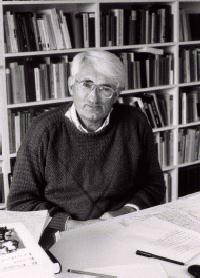
slight, white-haired quiet looking guy
The interpretive scheme set forth by Marx for the Phenomenology of Mind contains the program for an instrumentalist translation of Hegel’s philosophy of absolute reflection:
The greatness of Hegel’s phenomenology and its end result-the dialectic of negativity as motive and productive principle-is thus ... that Hegel grasps the self-generation of man as a process, objectification as de-objectification, as alienation and the overcoming of this alienation; in other words, that he grasps the essence of labour and comprehends objective man, who is true man because of his reality, as the result of his own labour. [Marx, Critique of Hegel’s Philosophy in General]
The idea of self-constitution of the species through labour is to serve as the guide to appropriating the Phenomenology while demythologising it. As we have shown, the assumptions of the identity kept Hegel from reaping the real harvest of Kant, and they dissolve on this materialist basis. Ironically, however, the very viewpoint from which Marx correctly criticises Hegel keeps him from adequately comprehending his own studies. By turning the construction of the manifestation of consciousness into an encoded representation of the self-production of the species, Marx discloses the mechanism of progress in the experience of reflection, a mechanism that was concealed in Hegel’s philosophy. It is the development of the forces of production that provides the impetus to abolishing and surpassing a form of life that has been rigidified in positivity and become an abstraction. But at the same time, Marx deludes himself about the nature of reflection when he reduces it to labour. identifies “transformative abolition (Aufheben), as objective movement which reabsorbs externalisation,” with the appropriation of essential powers that have been externalised in working on material.
Marx reduces the process of reflection to the level of instrumental action. By reducing the self-positing of the absolute ego to the more tangible productive activity of the species, be eliminates reflection as such as a motive force of history, even though be retains the framework of the philosophy of reflection. His re-interpretation of Hegel’s Phenomenology betrays the paradoxical consequences of taking Fichte’s philosophy of the ego and undermining it with materialism. Here the appropriating subject confronts in the non-ego not lust a product of the ego but rather some portion of the contingency of nature. In this case the act of appropriation is no longer identical with the reflective re-integration of some previously externalised part of the subject itself. Marx preserves the relation of the subject’s prior positing activity (which was not transparent to itself), that is of hypostatisation, to the process of becoming conscious of what has been objectified, that is of reflection. But, on the premises of a philosophy of labour, this relation turns into the relation of production and appropriation, of externalisation and the appropriation of externalised essential powers. Marx conceives of reflection according to the model of production. Because he tacitly starts with this premise, it is not inconsistent that he does not distinguish between the logical status of the natural sciences and of critique.
In fact, Marx does not completely obliterate the distinction between the natural sciences and the sciences of man. The outlines of an instrumentalist epistemology enable him to have a transcendental-pragmatistic conception of the natural sciences. They represent a methodically guaranteed form of the kind of knowledge which, on a pre-scientific level, is accumulated in the system of social labour. In experiments, assumptions about the law-like connection of events are tested in a manner fundamentally identical with that of “Industry,” that is of pre-scientific situations of feedback-controlled action. In both cases, the transcendental viewpoint of possible technical control, subject to which experience is organised and reality objectified, is the same. With regard to the epistemological justification of the natural sciences, Marx stands with Kant against Hegel, although he does not identify them with knowledge as such. For Marx as for Kant the criterion of what makes science scientific is methodically guaranteed cognitive progress. Yet Marx did not simply assume this progress as evident. Instead, he measured it in relation to the degree to which natural-scientific information, regarded as in essence technically exploitable knowledge, enters the process of production:
The natural sciences have developed an enormous activity and appropriated an ever growing body of material. Philosophy has remained just as foreign to them as they remained foreign to philosophy. Their momentary union [criticising Schelling and Hegel] was only a fantastic illusion ... In a much more practical fashion, natural science has intervened in human life and transformed it by means of industry ... Industry is the real historical relation of nature, and thus of natural science, to man. [Marx, Private Property & Communism,]
On the other hand, Marx never explicitly discussed the specific meaning of a science of man elaborated as a critique of ideology and distinct from the instrumentalist meaning of natural science. Although he himself established the science of man in the form of critique and not as a natural science, be continually tended to classify it with the natural sciences. He considered unnecessary an epistemological justification of social theory. This shows that the idea of the self-constitution of mankind through labour sufficed to criticise Hegel but was inadequate to render comprehensible the real significance of the materialist appropriation of Hegel.
Invoking the model of physics, Marx claims to represent “the economic law of motion of modern society” as a “natural law.” In the Afterword to the second edition of Capital, Volume I he quotes with approval the methodological evaluation of a Russian reviewer. While the latter goes along with Comte ill emphasising the difference between economics and biology on the one hand and physics and chemistry on the other, and calls attention in particular to the restriction of the validity of economic laws to specific historical periods, he nevertheless equates this social theory with the natural sciences. Marx has only one concern,
to demonstrate through precise scientific investigation the necessity of definite orders of social relations and to register as irreproachably as possible the facts that serve him as points of departure and confirmation . . . Marx considers the movement of society as a process of natural history, governed by laws that are not only independent of the will, consciousness, and intention of men but instead, and conversely, determine their will, consciousness, and intentions.
In order to prove the scientific character of his analysis, Marx repeatedly made use of its analogy to the natural sciences. He I never gives evidence of having revised his early intention, according to which the science of man was to form a unity with the natural sciences:
Natural science will eventually subsume the science of man just as the science of man will subsume natural science: there will be a single science. [Marx, Private Property & Communism]
This demand for a natural science of man, with its positivist overtones, is astonishing. For the natural sciences are subject to the transcendental conditions of the system of social labour, whose structural change is supposed to be what the critique of political economy, as the science of man, reflects on. Science in the rigorous sense lacks precisely this element of reflection that characterises a critique investigating the natural-historical process of the self-generation of the social subject and also making the subject conscious of this process. To the extent that the science of man is an analysis of a constitutive process, it necessarily includes the self-reflection of science as epistemological critique. This is obliterated by the self-understanding of economics as a “human natural science.” As mentioned, this abbreviated methodological self-understanding is nevertheless a logical consequence of a frame of reference restricted to instrumental action.
If we take as our basis the materialist concept of synthesis through social labour, then both the technically exploitable knowledge of the natural sciences, the knowledge of natural laws, as well as the theory of society, the knowledge of laws of human natural history, belong to the same objective context of the self-constitution of the species. From the level of pragmatic, everyday knowledge to modern natural science, the knowledge of nature derives from man’s primary coming to grips with nature; at the same time it reacts back upon the system of social labour and stimulates its development. The knowledge of society can be viewed analogously. Extending from the level of the pragmatic self-understanding of social groups to actual social theory, it defines the self-consciousness of societal subjects. Their identity is reformed at each stage of development of the productive forces and is in turn a condition for steering the process of production:
The development of fixed capital indicates the extent to which general social knowledge has become an immediate force of production, and therefore [!] the conditions of the social life process itself have come under the control of the general intellect. [Grundrisse p594]
So far as production establishes the only framework in which the genesis and function of knowledge can be interpreted, the science of man also appears under categories of knowledge for control. At the level of the self-consciousness of social subjects, knowledge that makes possible the control of natural processes turns into knowledge that makes possible the control of the social life process. In the dimension of labour as a process of production and appropriation, reflective knowledge changes into productive knowledge. Natural knowledge congealed in technologies impels the social subject to an ever more thorough knowledge of its “Process of material exchange” with nature. In the end this knowledge is transformed into the steering of social processes in a manner not unlike that in which natural science becomes the power of technical control.
In the preliminary studies for the Critique of Political Economy there is a model according to which the history of the species is linked to an automatic transposition of natural science and technology into a self-consciousness of the social subject (general intellect)-a consciousness that controls the material life process. According to this construction the history of transcendental consciousness would be no more than the residue of the history of technology. The latter is left exclusively to the cumulative evolution of feedback-controlled action and follows the tendency to augment the productivity of labour and to replace human labour power-“the realisation of this tendency is the transformation of the means of labour into machinery.” The epochal turning-points in the evolution of technology show how all capacities of the human organism combined in the behavioural system of instrumental action are gradually transferred to the means of labour: First the capacities of the executing organs, then those of the sense organs, the energy production of the human organism, and finally the capacities of the controlling organ, the brain. The stages of technical progress can in principle be foreseen. In the end the entire labour process will have separated itself from man and reside only in the means of labour.
The self-generative act of the human species is complete as soon as the social subject has emancipated itself from necessary labour and, so to speak, takes its place alongside scientised production. At that point labour time and the quantity of labour expended also become obsolete as a measure of the value of goods produced. The spell of materialism cast upon the process of humanisation by the shortage of available means and the compulsion to labour will be broken. The social subject (as ego) will have permeated and appropriated the nature objectified through labour (the non-ego), as much as is conceivable under the conditions of production (the activity of the “absolute ego”). Along with the materialist interpretation of his theory of knowledge, Fichte’s thought has been translated into a Saint-Simonian perspective. An unusual passage from the Grundrisse der Kritik der Politischen Okonomie, which does not recur in the parallel investigations in Capital, fits into this framework:
To the degree ... that large-scale industry develops, the creation of social wealth depends less on labour time and the quantity of labour expended than on the power of the instruments that are set in motion during labour time and which themselves in turn-their powerful effectiveness-themselves in turn are in no proportion to the immediate labour time that their production costs. Rather they depend on the general level of science and technological progress, or the application of science to production. (The development of this science, especially natural science, and all others along with it, is itself in turn proportional to the development of material production.) For example, agriculture becomes the mere application of the science of material exchange as it is to be regulated most advantageously for the entire social body. Real wealth manifests itself rather-and large industry reveals this-in the tremendous disproportion between the labour time expended and its product just as in the qualitative disproportion between labour that bad been reduced to a pure abstraction and the power of the productive process that it oversees. As man relates to the process of production as overseer and regulator, labour no longer seems so much to be enclosed within the process of production. (What holds for machinery holds just as well for the combination of human activities and the development of human intercourse.) The labourer no longer inserts a modified natural object between the object and himself. Instead he inserts the natural process that he has transformed into an industrial one as a medium between himself and inorganic nature, of which he takes command. He takes his place alongside the process of production instead of being its chief agent. In this transformation what appears as the keystone of production and wealth is neither the immediate labour performed by man himself nor the time he labours but the appropriation of his own general productive force, his understanding of nature and its mastery through his societal existence-in a word, the development of the social individual....
Therewith production based on exchange value collapses, and the immediate material process of production sheds the form of scantiness and antagonism. The free development of individualities and therefore not the reduction of necessary labour time in order to create surplus labour, but rather the reduction of society’s necessary labour to a minimum, which then has its counterpart in the artistic, scientific, and other education of individuals through the time that has become free for all of them and through the means that have been created. [Grundrisse p 592]
Here it is from the methodological perspective that we are interested in this conception of the transformation of the labour process into a scientific process that would bring man’s “material exchange” with nature under the control of a human species totally emancipated from necessary labour. A science of man developed from this point of view would have to construct the history of the species as a synthesis through social labour and only through labour. It would make true the fiction of the early Marx that natural science subsumes the science of man just as much as the latter subsumes the former. For, on the one hand, the scientisation of production is seen as the movement that brings about the identity of a subject that knows the social life process and then also steers it. In this sense the science of man would be subsumed under natural science. On the other hand, the natural sciences are comprehended in virtue of their function in the self-generative process of the species as the exoteric disclosure of man’s essential powers. In this sense, natural science would be subsumed under the science of man. The latter contains principles from which a methodology of the natural sciences resembling a transcendental-logically determined pragmatism could be derived. But this science does not question its own epistemological foundations. It understands itself in analogy to the natural sciences as productive knowledge. It thus conceals the dimension of self-reflection in which it must move regardless.
Now the argument which we have taken up was not pursued beyond the stage of the “rough sketch” of Capital. It is typical only of the philosophical foundation of Marx’s critique of Hegel, that is production as the “activity” of a self-constituting species. It is not typical of the actual social theory in which Marx materialistically appropriates Hegel on a broad scale. Even in the Grundrisse we find already the official view that the transformation of science into machinery does not by any means lead of itself to the liberation of a self-conscious general subject that masters the process of production. According to this other version the self-constitution of the species takes place not only in the context of men’s instrumental action upon nature but simultaneously in the dimension of power relations that regulate men’s interaction among themselves. Marx very precisely distinguishes the self-conscious control of the-social life process by the combined producers from an automatic regulation of the process of production that has become independent of these individuals. In the former case the workers relate to each other as combining with each other of their own accord. In the latter they are merely combined,
so that the aggregate labour as a totality is not the work of the individual worker, and is the work of the various workers together only insofar as they are combined and not insofar as they relate to each other as combining of their own accord. [Grundrisse p 374]
Taken by itself, scientific-technical progress does not yet lead to a reflexive comprehension of the traditional, “natural” operation of the social life process in such a way that self-conscious control could result:
In its combination this labour [of scientised production] appears just as much in the service of an alien will and an alien intelligence, which directs it. It has its psychic unity outside itself and its material unity subordinated to the unity of machinery, of fixed capital, which is grounded in the object. Fixed capital, as an animated monster, objectives scientific thought and is in fact the encompassing aspect. It does not relate to the individual worker as an instrument. Instead he exists as an animated individual detail, a living isolated accessory to the machinery. [Grundrisse p 374]
The institutional framework that resists a new stage of reflection (which, it is true, is prompted by the progress of science established as productive force) is not immediately the result of a life that has been rigidified to the point of abstraction: in Hegel’s phenomenological language, a form of the manifestation of consciousness. What this represents is not immediately a stage of technological development but rather a relation of social force, namely the power of one social class over another. The relation of force usually appears in political form. In contrast, the distinctive feature of capitalism is that the class relation is economically defined through the free labour contract as a form of civil law. As long as this mode of production exists, the most progressive scientisation of production could not lead to the emancipation of a self-conscious subject that knows and regulates the social life process. Of necessity it would only sharpen the “litigant contradiction” of that mode of production:
On the one hand it [capital] thus calls to life all the powers of science and of nature as of social combination and social intercourse, to make the creation of wealth (relatively) independent of the labour time expended on it. On the other, it wants to take the gigantic social forces generated in this way and measure them against labour time and confine them within the bounds required in order to preserve as value the value already created. [Grundrisse p 593]
The two versions that we have examined make visible an indecision that has its foundation in Marx’s theoretical approach itself. For the analysis of the development of economic formations of society he adopts a concept of the system of social labour that contains more elements than are admitted to in the idea of a species that produces itself through social labour. Self-constitution through social labour is conceived at the categorical level as a process of production, and instrumental action, labour in the sense of material activity, or work designates the dimension in which natural history moves. At the level of his material investigations, on the other hand, Marx always takes account of social practice that encompasses both work and interaction. The processes of natural history are mediated by the productive activity of individuals and the organisation of their interrelations. These relations are subject to norms that decide, with the force of institutions, how responsibilities and rewards, obligations and charges to the social budget are distributed among members. The medium in which these relations of subjects and of groups are normatively regulated is cultural tradition. It forms the linguistic communication structure on the basis of which subjects interpret both nature and themselves in their environment.
While instrumental action corresponds to the constraint of external nature and the level of the forces of production determines the extent of technical control over natural forces, communicative action stands in correspondence to the suppression of man’s own nature. The institutional framework determines the extent of repression by the unreflected, “natural” force of social dependence and political power, which is rooted in prior history and tradition. A society owes emancipation from the external forces of nature to labour processes, that is to the production of technically exploitable knowledge (including “the transformation ,of the natural sciences into machinery”). Emancipation from the compulsion of internal nature succeeds to the degree that institutions based on force are replaced by an organisation of social relations that is bound only to communication free from domination. This does not occur directly through productive activity, but rather through the revolutionary activity of struggling classes (including the critical activity of reflective sciences). Taken together, both categories of social practice make possible what Marx, interpreting Hegel, calls the self-generative act of the species. He sees their connection effected in the system of social labour. That is why “production” seems to him the movement in which instrumental action and the institutional framework, or “Productive activity” and “relations of production,” appear merely as different aspects of the same process.
However, if the institutional framework does not subject all members of society to the same repressions, then the tacit expansion of the frame of reference to include in social practice both work and interaction must necessarily acquire decisive importance for the construction of the history of the species and the question of its epistemological foundation. If production attains the level of producing goods over and above elementary needs, the problem arises of distributing the surplus product created by labour. This problem is solved by the formation of social classes, which participate to varying degrees in the burdens of production and in social rewards. With the cleavage of the social system into classes that are made permanent by the institutional framework, the social subject loses its unity: “To regard society as one single subject is, moreover, to regard it falsely-speculatively.”
As long as we regard the self-constitution of the species through labour only with respect to the power of control over natural processes that accumulates in the forces of production, it is meaningful to speak of the social system in general and to speak of the social subject in the singular. For the level of development of the forces of production determines the system of social labour as a whole. In principle the members of a society all live at the same level of mastery of nature, which in each case is given with the available technical knowledge. So far as the identity of a society takes form via this level of scientific-technical progress, it is the self-consciousness of “the” social subject. But as we now see, the self-formative process of the species does not coincide with the genesis of this subject of scientific-technical progress. Rather, this “self-generative act,” which Marx comprehended as a materialistic activity is accompanied by a self-formative process mediated by the interaction of class subjects either under compulsory integration or in open rivalry.
While the constitution of the species in the dimension of labour appears linearly as a process of production and the growth of complexity, in the dimension of the struggle of social classes it takes place as a process of oppression and self-emancipation. In both dimensions each new stage of development is characterised by a supersession of constraint: through emancipation from external natural constraint in one and from repressions of internal nature in the other. The course of scientific-technical progress is marked by the epochal innovations through which functional elements of the behavioural system of .instrumental action are reproduced step by step at the level of machines. The limiting value of this development is thus defined: the organisation of society itself as an automaton. The course of the social self-formative process, on the other hand, is marked not by new technologies but by stages of reflection through which the dogmatic character of surpassed forms of domination and ideologies are dispelled, the pressure of the institutional framework is sublimated, and communicative action is set free as communicative action. The goal of this development is thereby anticipated: the, organisation of society linked to decision-making processes on the basis of discussion free from domination. Raising the productivity of technically exploitable knowledge, which in the sphere of socially necessary labour leads to the complete substitution of machinery for men, has its counterpart here in the self-reflection of consciousness in its manifestations to the point where the self-consciousness of the species has attained the level of critique and freed itself from all ideological delusion. The two developments do not converge. Yet they are interdependent; Marx tried in vain to capture this in the dialectic of forces of production and relations of production. In vain-for the meaning of this “dialectic” must remain unclarified as long as the materialist concept of the synthesis of man and nature is restricted to the categorical framework of production.
If the idea of the self-constitution of the human species in natural history is to combine both self-generation through productive activity and self-formation through critical-revolutionary activity, then the concept of synthesis must also incorporate a second dimension. The ingenious combination of Kant and Fichte then no longer suffices.
Synthesis through labour mediates the social subject with external nature as its object. But this process of mediation is interlocked with synthesis through struggle, which, in each case, mediates two partial subjects of society that make each other into objects-in other words, two social classes. Knowledge, the synthesis of the material of experience and forms of the mind, is only one aspect of both processes of mediation. Reality is interpreted from a technical viewpoint in the former and from a practical viewpoint in the latter. Synthesis through labour brings about a theoretical-technical relation between subject and object; synthesis through struggle brings about a theoretical-practical relation between them. Productive knowledge arises in the first, reflective knowledge in the second. The only model that presents itself for synthesis of the second sort comes from Hegel. It treats of the dialectic of the moral life, developed by Hegel in his early theological writings, in political writings of the Frankfurt period, and in the Jena philosophy of mind, but which he did not incorporate into his system.
In his fragment on the spirit of Christianity, Hegel unfolds the dialectic of the moral life through the example of the punishment that befalls one who destroys a moral totality. The criminal” annuls the complementarity of unconstrained communication and the reciprocal gratification of needs by putting himself as an individual in place of the totality. In so doing he sets off a process of fate that turns upon him. The struggle ignited between the conflicting parties and the hostility against the other who has been injured and oppressed render perceptible the lost complementarity and past friendship. The criminal is confronted with the negating power of his past life. He experiences his guilt. The guilty one must suffer under the violence of the repressed and sundered life, which he has himself provoked, until he experiences in the repression of the other’s life the deficiency of his own, and, in his turning away from the other subject, his alienation from himself. This causality of fate is ruled by the power of the suppressed life. The latter can only be reconciled if the experience of the negativity of the sundered life gives rise to yearning for what has been lost and compels the guilty one to identify with the existence of the other, against which he is struggling, as that which he is denying in his own. Then both parties recognise their rigidified position in relation to each other as the result of detachment and abstraction from their common life context. And in the latter, the dialogic relation of recognising oneself in the other, they experience the common ground of their existence.
Marx could have employed this model and constructed the disproportional appropriation of the surplus product, which has class antagonism as its consequence, as a “crime.” The punitive causality of fate is executed upon the rulers as class struggle coming to a head in revolutions. Revolutionary violence reconciles the disunited parties by abolishing the alienation of class antagonism that set in with the repression of initial morality. In his work on municipal government and in the fragment of the introduction to his work on the German constitution Hegel developed the dialectic of the moral life with regard to political conditions in Würtemberg and the old German Empire. The positivity of rigidified political life mirrors the disruption of a moral totality; and the revolution that must occur is the reaction of suppressed life, which will visit the causality of fate upon the rulers.
Marx, however, conceives the moral totality as a society in which men produce in order to reproduce their own life through the appropriation of an external nature. Morality is an institutional framework constructed out of cultural tradition; but it is a framework for processes of production. Marx takes the dialectic of the moral life, which operates on the basis of social labour, as the law of motion of a defined conflict between definite parties. The conflict is always about the organisation of the appropriation of socially created products, while the conflicting parties are determined by their position in the process of production, that is as classes. As the movement of class antagonism, the dialectic of the moral life is linked to the development of the system of social labour. The overcoming of abstraction, that is the critical revolutionary reconciliation of the estranged parties, succeeds only relative to the level of development of the forces of production. The institutional framework also incorporates the constraint Of external nature, which expresses itself in the degree of mastery Of nature, the extent of socially necessary labour, and in the relation of available rewards to socially developed demands. Through the repression of needs and wishes, it translates this constraint into a compulsion of internal nature, in other words into the constraint of social norms. That is why the relative destruction of the moral relation can be measured only by the difference between the actual degree of institutionally demanded repression and the degree of repression that is necessary at a given level of the forces of production. This difference is a measure of objectively superfluous domination. It is those who establish such domination and defend positions of power of this sort who set in motion the causality of fate, divide society into social classes, suppress justified interests, call forth the reactions of suppressed life, and finally experience their just fate in revolution. They are compelled by the revolutionary class to recognise themselves in it and thereby to overcome the alienation of the existence of both classes. s long as the constraint of external nature persists in the form of economic scarcity, every revolutionary class is induced, after its victory to a new “injustice,” namely the establishment of a new class rule. Therefore the dialectic of the moral life must repeat itself until the materialist spell that is cast upon the reproduction of social life, the Biblical curse of necessary labour, is broken technologically.
Even then the dialectic of the moral life does not automatically come to rest. But the inducement by which it is henceforth kept in motion assumes a new quality. It now stems not from scarcity, but rather only from the masochistic gratification of a form of domination that impedes taming the struggle for existence, which is objectively possible, and puts off uncoercive interaction on the basis of communication free from domination. This domination is then reproduced only for its own sake. It hinders alteration of the aggregate state of natural history-the transition to a history freed from the dialectic of the moral life, which could unfold in the medium of dialogue on the basis of production relieved of human labour.
Unlike synthesis through social labour, the dialectic of class antagonism is a movement of reflection. For the dialogic relation of the complementary unification of opposed subjects, the re-establishment of morality, is a relation of logic and of life conduct at once. This can be seen in the dialectic of the moral relation developed by Hegel under the name of the struggle for recognition. Here the suppression and renewal of the dialogue situation are reconstructed as a moral relation. The grammatical relations of communication, once distorted by force, exert force themselves. Only the result of dialectical movement eradicates this force and brings about the freedom from constraint contained in dialogic self-recognition-in-the-other: in the language of the young Hegel, love as reconciliation. Thus it is not unconstrained inter-subjectivity itself that we call dialectic, but the history of its repression and re-establishment. The distortion of the dialogic relation is subject to the causality of split-off symbols and reified grammatical relations: that is, relations that are removed from public communication, prevail only behind the backs of subjects, and are thus also empirically coercive.
Marx, confronted with contemporary capitalism, analyses a social form that no longer institutionalises class antagonism in the form of immediate political domination and social force; instead, it stabilises it in the legal institution of the free labour contract, which congeals productive activity into the commodity form. This commodity form is objective illusion, because it makes the object of conflict unrecognisable for both parties, capitalists as well as wage labourers, and restricts their communication. The commodity form of labour is ideology, because it simultaneously conceals and expresses the suppression of an unconstrained dialogic relation:
The mystery of the commodity form, therefore, is simply that it takes the social characteristics of men’s own labour and reflects them back to men as the objective characteristics of the products of labour themselves, as the social natural properties of these things. It thus also reflects the social relation of the producers to the totality of labour as a social relation of objects, one that exists independently of the producers. Through this quid pro quo the products of labour become commodities and natural supernatural or social things. Thus the light impression something makes on’ the optic nerve does not appear as a subjective stimulus of the optic nerve itself but as the objective form of a thing outside the eye. But in vision light really is projected from one thing, the external object, onto another thing, the eye. It is a physical relation between physical things. On the contrary, the commodity form, and the value relation of the products of labour in which it is expressed, have absolutely nothing to do with their physical nature and the concrete relations arising from it. Here it is only the specific social relation of men themselves that assumes for them the phantasmagoric form of a relation of things. Hence in order to find an analogy we must take flight to the obscure region of the religious world. Here the products of the human mind appear endowed with their own life, as independent forms that enter into relations with one another and with men. In the commodity world, the same holds for the products of the human hand. This I call the fetishism that clings to the products of labour as soon as they are produced as commodities, and which therefore is inseparable from commodity production. [Marx, Capital]
The institutionally secured suppression of the communication through which a society is divided into social classes amounts to fetishising the true social relations. Thus, according to Marx, the distinguishing feature of capitalism is that it has brought ideologies from the heights of mythological or religious legitimations of tangible domination and power down into the system of social labour. In liberal bourgeois society the legitimation of power is derived from the legitimation of the market, that is from the “justice” of the exchange of equivalents inherent in exchange relations. It is unmasked by the critique of commodity fetishism.
I have chosen this example because it is central to Marx’s theory of society. It shows that the transformation of the institutional framework, viewed as the movement of class antagonism, is a dialectic of the consciousness of classes in its manifestations. Particularly a social theory that conceives the self-constitution of the species from the double perspective of synthesis through the struggle of classes and their social labour, therefore, will be able to analyse the natural history of production only in the framework of a reconstruction of the manifestations of the consciousness of these classes. The system of social labour develops only in an objective connection with the antagonism of classes; the development of the forces of production is intertwined with the history of revolutions. The results of this class struggle are always sedimented in the institutional framework of a society, in social form. Now, as the repeated dialectic of the moral life, this struggle is a process of reflection writ large. In it the forms of class consciousness arise: not idealistically in the self-movement of an absolute mind but materialistically on the basis of objectifications of the appropriation of an external nature. This reflection, in which an existing form of life is convicted of its abstraction and thereby revolutionised, is prompted by the growing potential of control over the natural processes objectified in work. The development of the forces of production at any time augments the disproportion between institutionally demanded and objectively necessary repression, thereby making conscious the existing untruth, the felt disruption of a moral totality.
This has two consequences for the methodological status of social theory. On the one band the science of man is continuous with the self-reflection of class consciousness in its manifestations. Like the Phenomenology of Mind it is guided by the experience of reflection in reconstructing the course of the manifestation of consciousness, although the latter is now seen as prompted by developments of the system of social labour. But, on the other hand, this science of man also resembles Hegel’s Phenomenology in knowing itself to be involved in the self-formative process that it recollects. The knowing subject must also direct the critique of ideology at itself. The natural sciences merely extend in methodical form the technically exploitable knowledge that has accumulated prescientifically within the transcendental framework of instrumental action. The science of man, however, “tends in methodical form the reflective knowledge that is already transmitted prescientifically within, the same objective structure of the dialectic of the moral life in which this science finds itself situated. In this structure, the knowing subject can only cast off the traditional form in which it appears to the degree that it comprehends the self-formative process of the species as a movement of class antagonism mediated at every stage by processes of production, recognises itself as the result of the history of class consciousness in its manifestations, and thereby, as self-consciousness, frees itself from objective illusion.
For Marx, the phenomenological exposition of consciousness in its manifestations, which served Hegel only as an introduction to scientific knowledge, becomes the frame of reference in which the analysis of the history of the species stays confined. Marx did not adopt an epistemological perspective in developing his conception of the history of the species as something that has to be comprehended materialistically. Nevertheless, if social practice does not only accumulate the successes of instrumental action but also, through class antagonism, produces and reflects on objective illusion, then, as part of this process, the analysis of history is possible only in a phenomenologically mediated mode of thought. The science of man itself Jr is critique and must remain so. For after arriving at the concept of synthesis through a reconstruction of the course of consciousness in its manifestations, there is only one condition under which critical consciousness could adopt a perspective that allowed disengaging social theory from the -epistemological mediation of phenomenological self-reflection: that is if critical consciousness could apprehend and understand itself as absolute synthesis. As it is, however, social theory remains embedded in the framework of phenomenology, while the latter, under materialist presuppositions, assumes the form of the critique of ideology.
If Marx bad reflected on the methodological presuppositions of social theory as he sketched it out and not overlaid it with a philosophical self-understanding restricted to the categorical framework of production, the difference between rigorous empirical science and critique would not have been concealed. If Marx had not thrown together interaction and work under the label of social practice (Praxis), and had he instead related the materialist concept of synthesis likewise to the accomplishments of instrumental action and the nexuses of communicative action, then the idea of a science of man would not have been obscured by identification with natural science. Rather, this idea would have taken up Hegel’s critique of the subjectivism of Kant’s epistemology and surpassed it materialistically. It would have made clear that ultimately a radical critique of knowledge can be carried out only in the form of a reconstruction of the history of the species, and that conversely social theory, from the viewpoint of the self-constitution of the species in the medium of social labour and class struggle, is possible only as the self-reflection of the knowing subject.
On this foundation philosophy’s position with regard to science could have been explicitly clarified. Philosophy is preserved in science as critique. A social theory that puts forth the claim to be a self-reflection of the history of the species cannot simply negate philosophy. Rather, the heritage of philosophy issues in the critique of ideology, a mode of thought that determines the method of scientific analysis itself. Outside of critique, however, philosophy retains no rights. To the degree that the science of man is a material critique of knowledge, philosophy, which as pure epistemology robbed itself of all content, indirectly regains its access to material problems. As philosophy, however, the universal scientific knowledge that philosophy wanted to be succumbs to the annihilating judgment of critique.”
Marx did not develop this idea of the science of man. By equating critique with natural science, he disavowed it. Materialist scientism only reconfirms what absolute idealism had already accomplished: 'the elimination of epistemology in favour of unchained universal “scientific knowledge” - but this time of scientific materialism instead of absolute knowledge.
With his positivist demand for a natural science of the social, Comte merely needed to take Marx, or at least the intention that Marx believed himself to be pursuing, at his word. Positivism turned its back to the theory of knowledge, whose philosophical self-liquidation had been carried on by Hegel and Marx, who were of one mind in this regard. In so doing, positivism regressed behind the level of reflection once attained by Kant. In continuity with pre-critical traditions, however, it successfully set about the task, which epistemology had abandoned and from which Hegel and Marx believed themselves exempted, of elaborating a methodology of the sciences.

Twitter Delicious Facebook Digg Stumbleupon Favorites More

 
Powered by Blogger